How is a product born? How fashion, retail and manufacturing companies work
At a fashion brand, a jacket passes ten stops before its in-store date, and at each stop a different position takes over the work. If you know which document and which screen is in whose hands along the way, you will understand all 20 positions more easily. This required reading is the first of the Academy's five trainings; then come the 20 position cards, and then the PLM, PIM and SRM trainings in order.
- Field of study
- 3 parts · in order · no time limit
- In each part
- Reading, Pimland screens, 3 short questions
- Fee
- Free
- Certificate
- Pimland Basic Certificate
The Academy starts here. Position cards open after this training.
- 1Ten stops
- 2The whole company
- 3Four modules
- 4Complete
 Training 1
From design to shelf, from shelf to passport

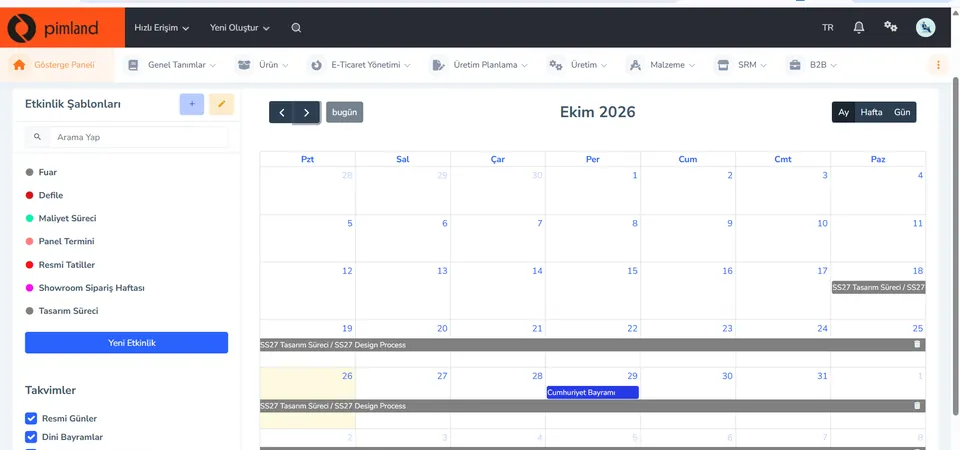
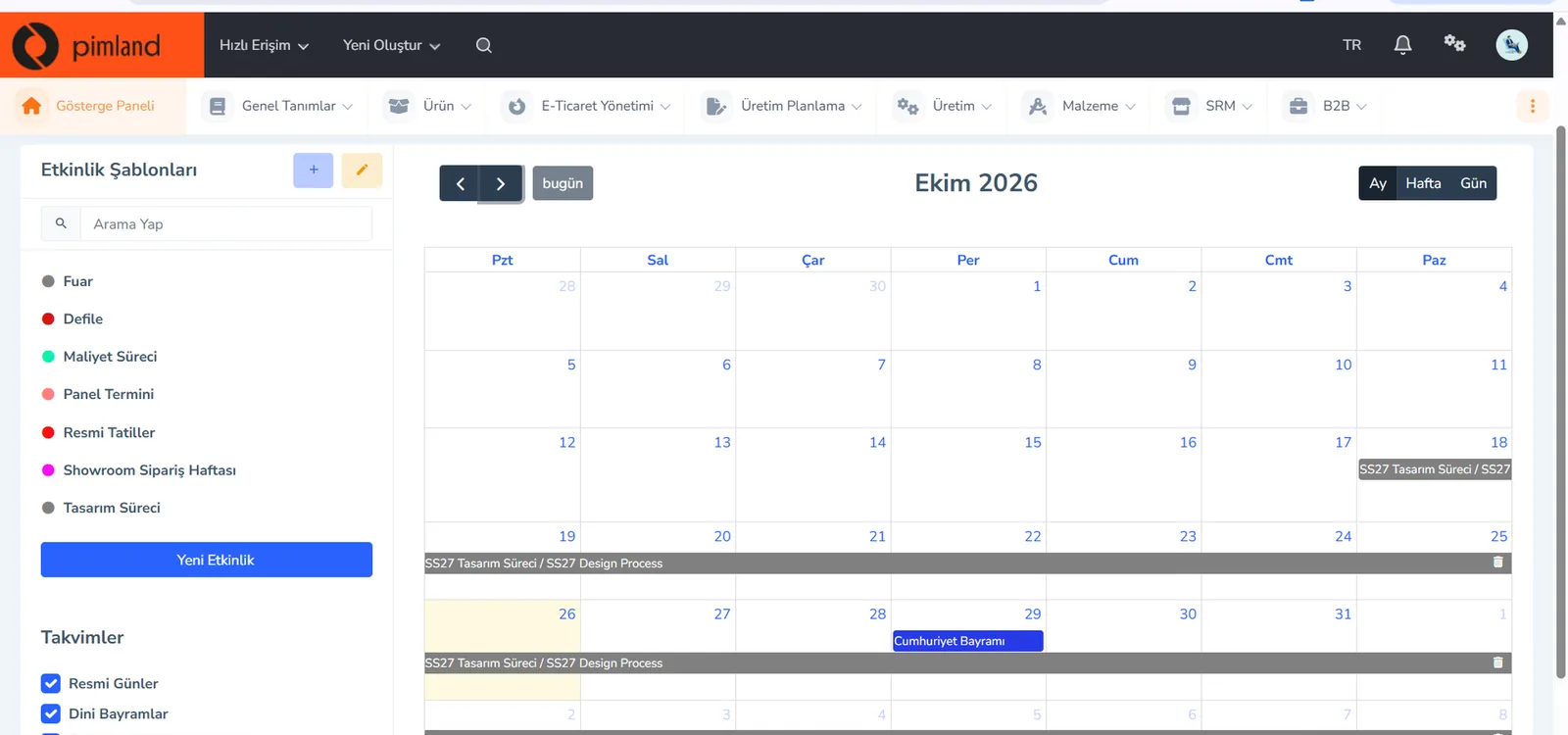
1. Brief and season calendar
The season's story, target customer and budget are written down; the launch date is fixed, and the calendar is built backwards from it.
DocumentSeason brief, season calendar
 Collection manager
 Merchandiser
2. Line plan
For each category, the plan sets how many styles, which price band, how many colors and what quantities to launch. Design will fill in the empty rows of this table.
DocumentLine plan
- Merchandiser
- Collection manager
 Costing specialist
3. Design
Moodboard, coded color palette, sketch and technical drawing. The style is born as a product card.
DocumentMoodboard, color palette, technical drawing
 Fashion designer
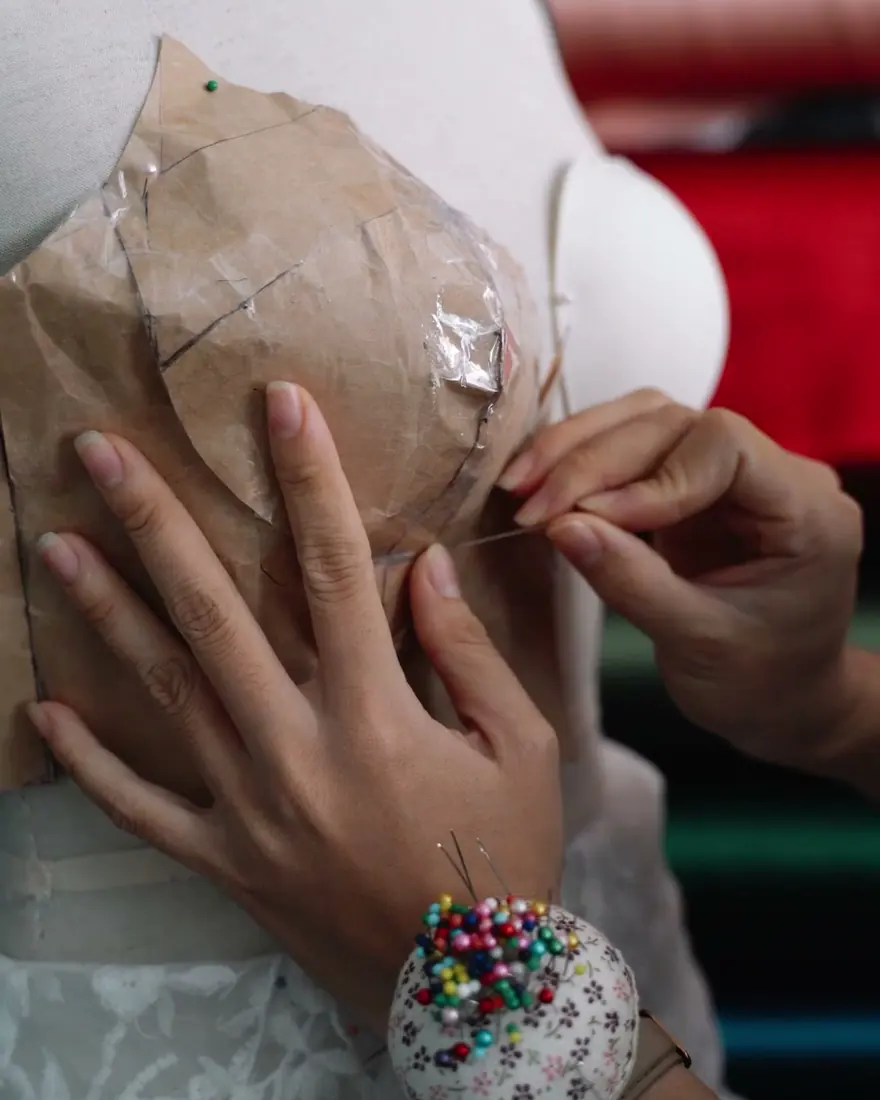
4. Tech pack and BOM
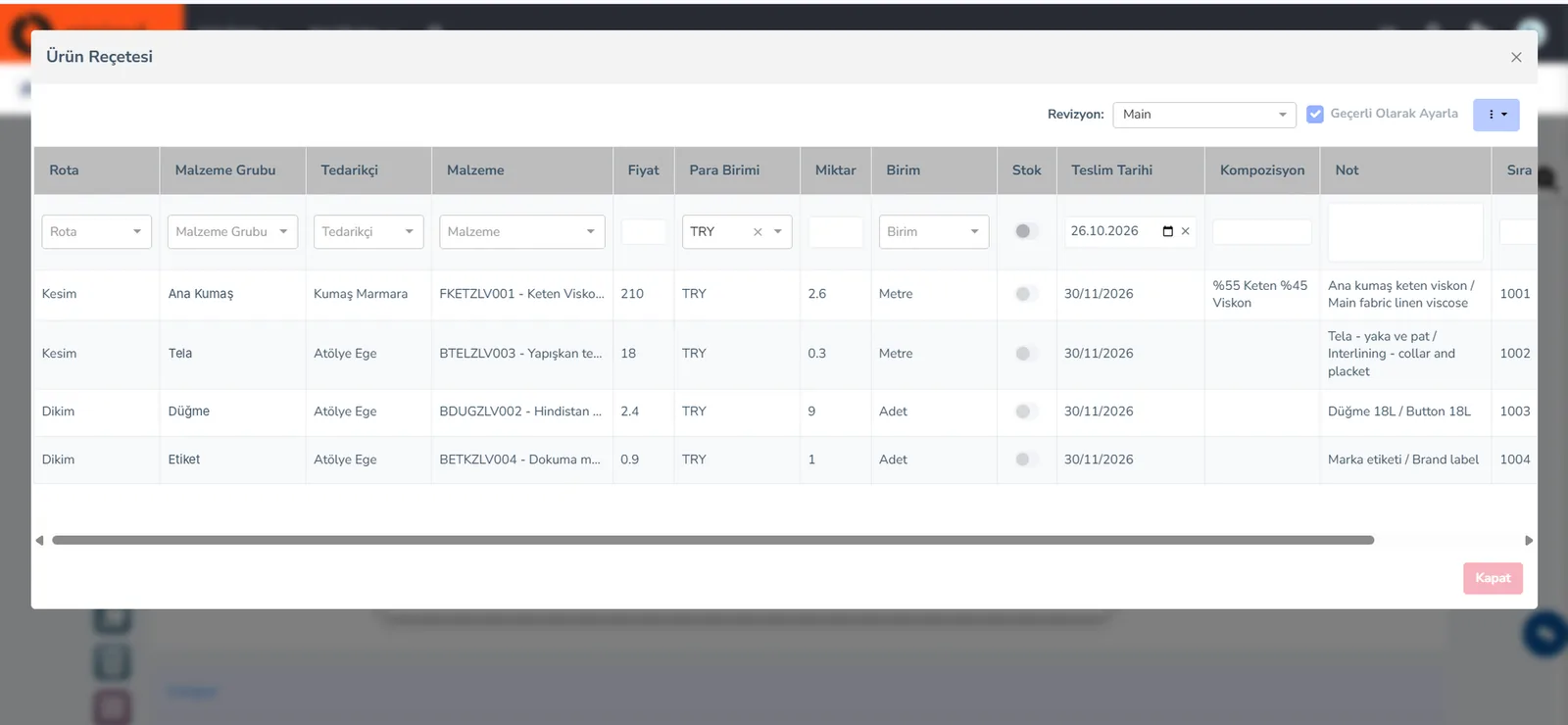
The drawing is turned into measurements, materials and workshop instructions. The BOM (bill of materials) lists every material with its quantity and supplier.
DocumentTech pack, bill of materials (BOM)
 Product development specialist
 Pattern maker
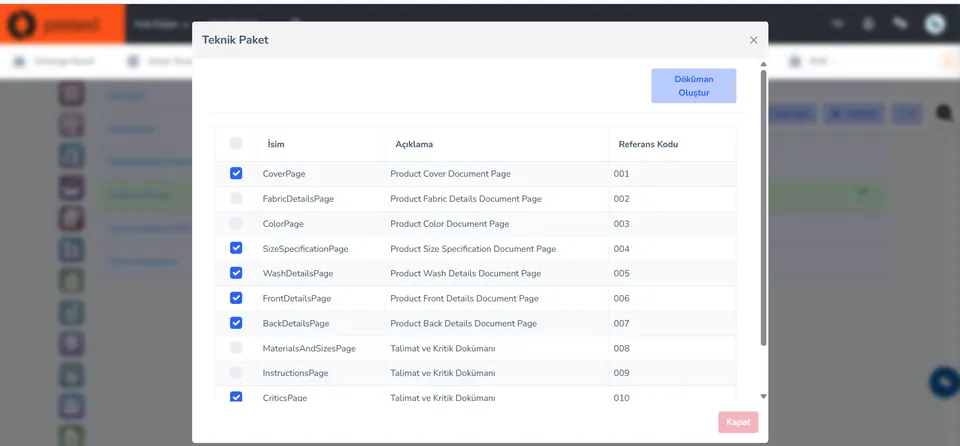
5. Pattern, sample and fit
The pattern is drawn, the proto sample is sewn, and the fit is corrected in fit sessions; every round goes on record.
DocumentMeasurement chart, sample request form, fit comments
- Pattern maker
 Sample coordinator
- Fashion designer
- Product development specialist
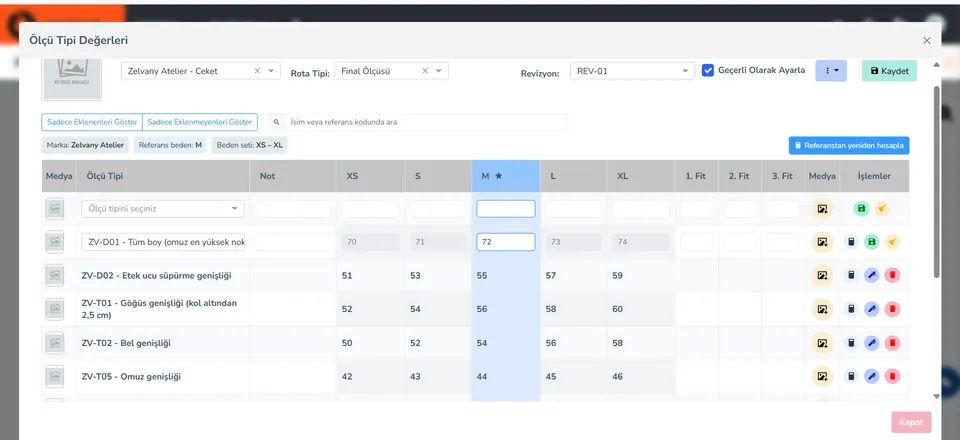
6. Sourcing and costing
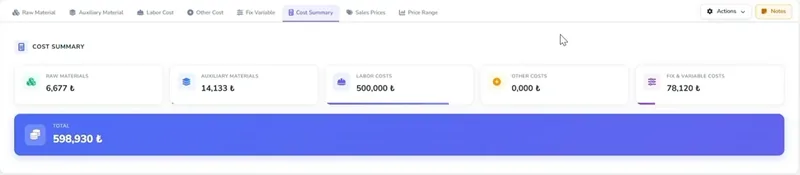
Material quotes are collected; the cost sheet comes out of the BOM and is compared with the target cost.
DocumentSupplier quotes, cost sheet
 Sourcing / purchasing specialist
- Costing specialist
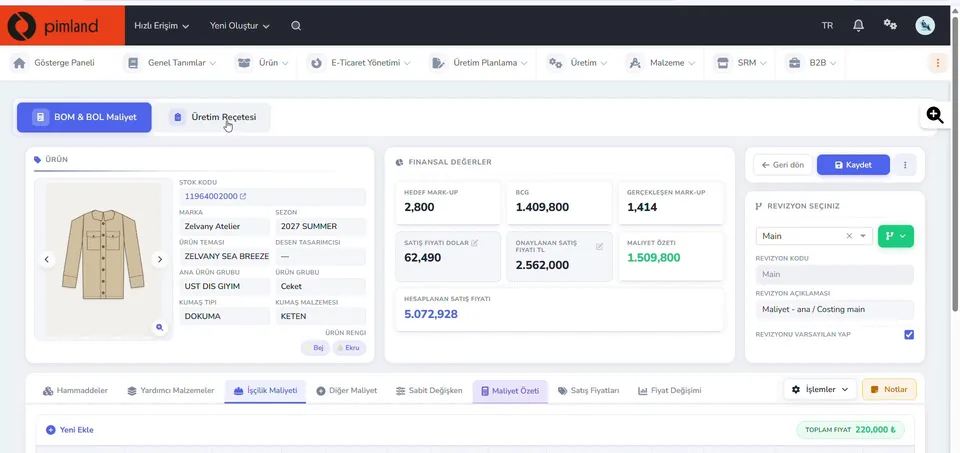
7. Collection approval
Samples, costs and sales expectations are laid side by side; for each style, the decision is to continue, revise or drop.
DocumentLine review decisions, cost summary
- Collection manager
- Merchandiser
- Fashion designer
- Costing specialist
8. Orders, production and quality
Material and subcontractor orders are placed; every stage from cutting to shipment is tracked against its planned date. In inline and final inspections, the lot is checked before it ships.
DocumentPurchase order, production plan, quality control report
- Sourcing / purchasing specialist
 Production follow-up coordinator
 Quality control coordinator
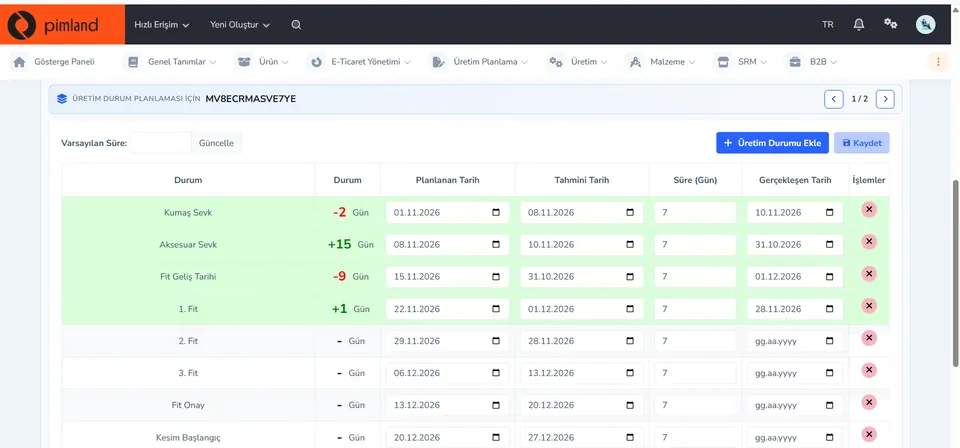
9. To the shelf and the screen
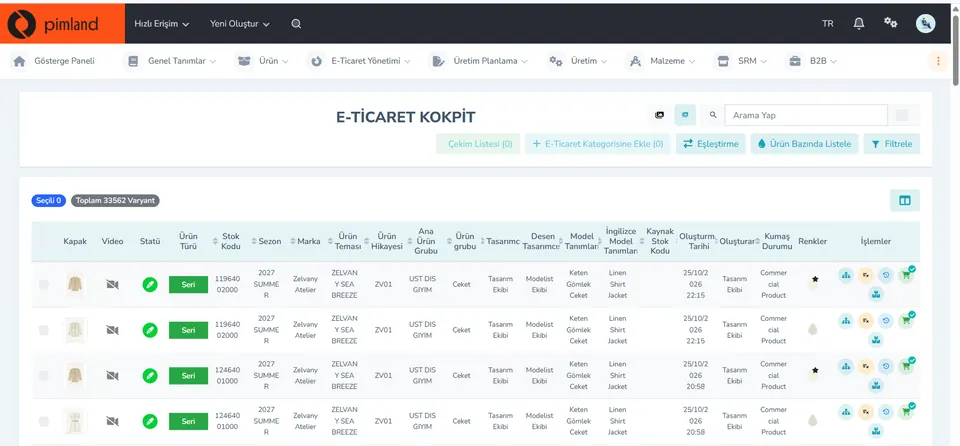
The product is photographed, the product card is prepared and it goes live on the channels; in the store, it goes out on the sales floor. Customers' questions come to the sales associate and customer service.
DocumentShoot list, product card, measurement chart
 Stylist
 E-commerce specialist
 Store sales associate
 Customer service representative
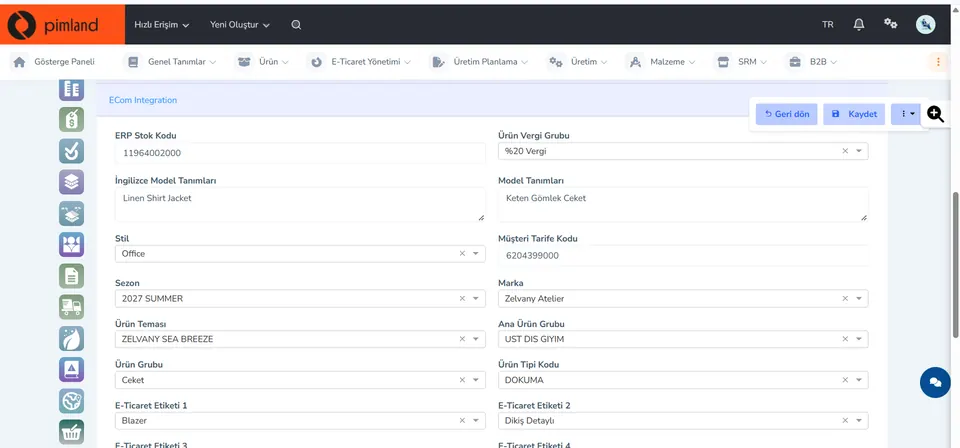
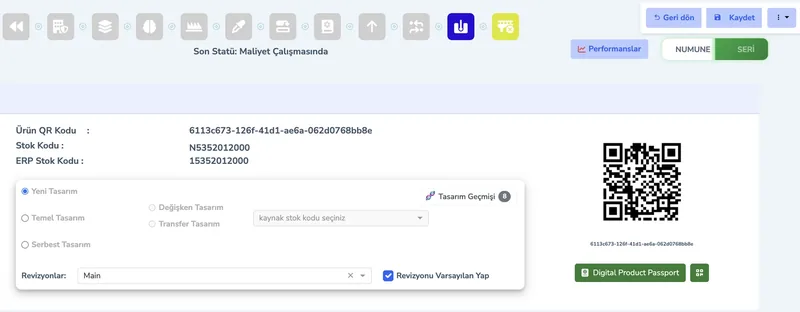
10. Passport
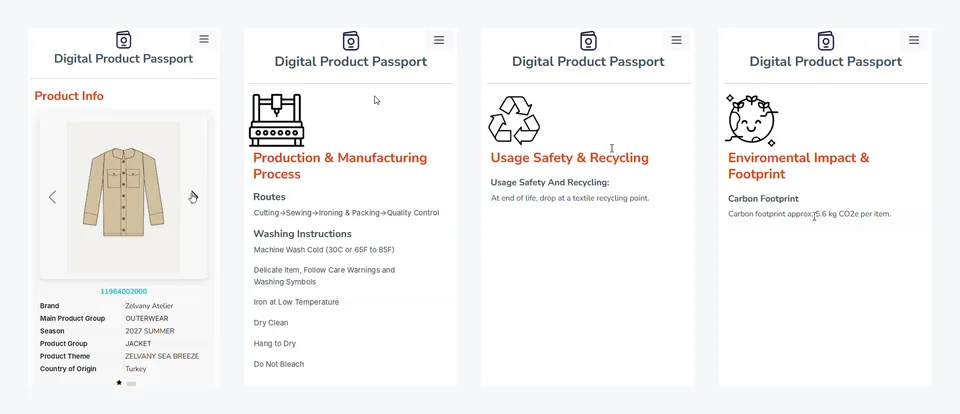
Composition, origin, care and end-of-life information is gathered in the digital product passport, opened by the QR code on the product; every claim has proof.
DocumentCertificates, test reports, digital product passport
 Sustainability specialist
- Store sales associate
- Customer service representative


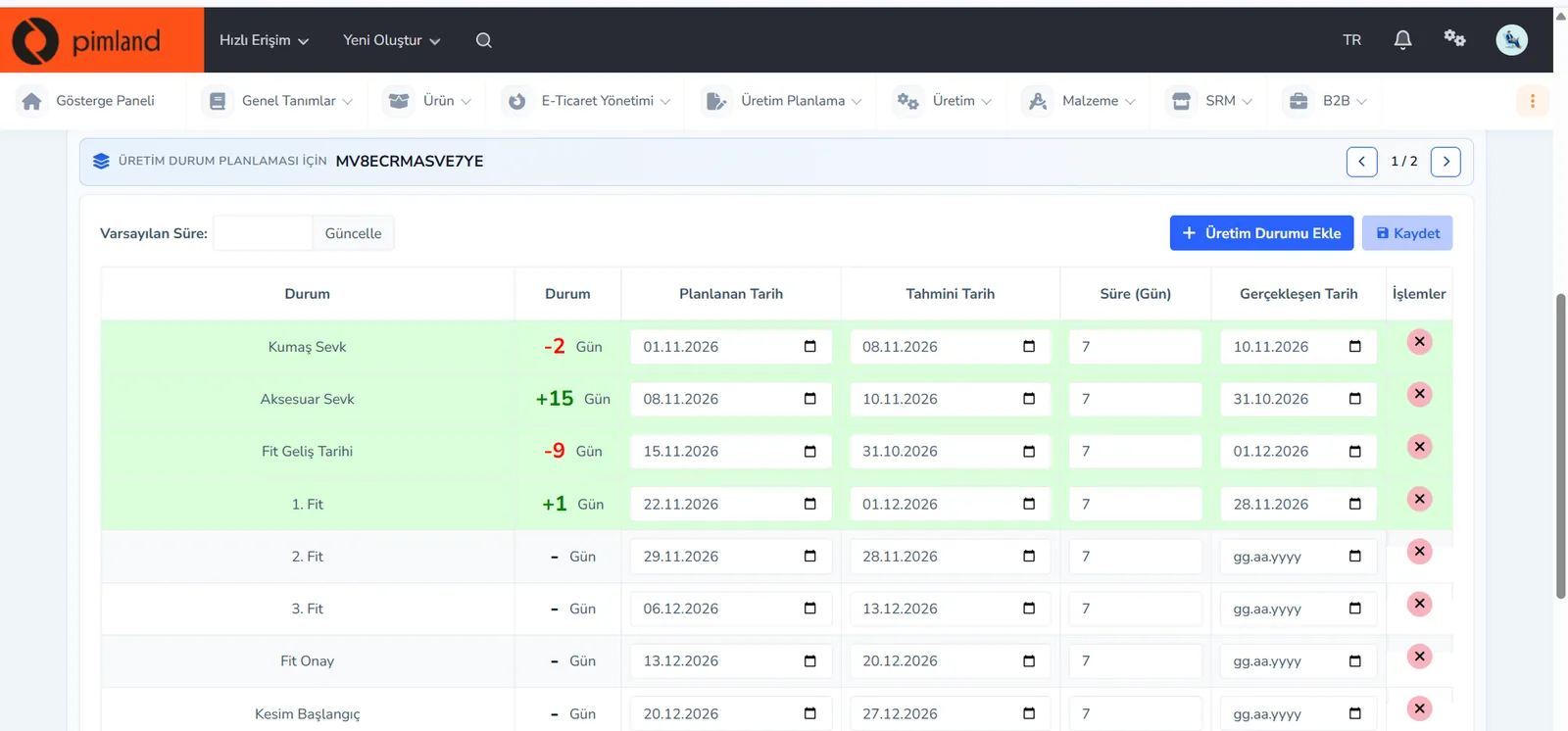


How does work flow in a fashion company?
In a fashion company, work flows like a relay race: one team finishes and the next takes over. The 'How is a product born?' part described the product's path; here you'll see the same path from inside the company: who works at each stage, what goes in, what comes out, where the work changes hands and where it most often breaks down. The flow doesn't run under the same names at every brand, but the order and the handovers are largely the same.
- 01
Season plan and brief
PLMThe season's story, target customer, budget and launch date are set. The calendar is built backwards from the launch; managers use it to see which weeks each team will be busiest.
3 positions · inputs, outputs, typical problem
- Collection manager
- Merchandiser
 Middle manager
Inputs- Last season's sales and return results
- Season budget
- Trend and market research
Outputs- Season brief
- Season calendar and milestones
- Team workload plan
Handover pointThe moment the brief and calendar are approved and opened to the design and merchandising teams.
Typical problemThe calendar is built only around the launch date; public holidays, trade fairs and supplier shutdowns are forgotten, and weeks get squeezed in the middle of the season.
CheckDoes every milestone have an owner and a date; were overlapping weeks flagged in advance?
- 02
Line plan and target cost
PLMCategory by category, the plan sets how many styles to launch, in which price band, and with which color and quantity range. Each row gets a target cost and a target margin; design works within this frame.
4 positions · inputs, outputs, typical problem
- Merchandiser
- Collection manager
- Costing specialist
 Planning specialist
Inputs- Season brief
- Sales data (sell-through, markdown)
- Price band and target margin
Outputs- Line plan
- Target cost per style
Handover pointThe moment the line plan is given to the design team as rows to fill in.
Typical problemThe target cost is discussed after design; a style everyone likes gets dropped at the costing stage.
CheckDoes every row in the line plan have a price band, target cost and quantity range written down?
- 03
Design and the birth of the product record
PLMThe moodboard, coded color palette, sketches and technical drawings are prepared; each style is opened as a product record. If a new fabric or fiber is being chosen, the sustainability specialist says at this stage which documents will be needed.
3 positions · inputs, outputs, typical problem
- Fashion designer
- Collection manager
- Sustainability specialist
Inputs- Line plan
- Fabric and trim swatch cards
- Color palette
Outputs- Technical drawing
- Product record (style code, color, category)
- Material proposal and list of required documents
Handover pointThe moment the designer hands the drawing and design notes over to product development.
Typical problemThe drawing is handed over without measurements or notes; product development has to guess what the designer intended.
CheckDoes the drawing show the front, back and details, with the coded color and target fabric written down?
- 04
Tech pack and BOM
PLMThe drawing is turned into measurements, materials and workshop instructions. The BOM (bill of materials) lists every material with its quantity and supplier. The composition is born here; from here it goes to the label, the product page and the passport.
3 positions · inputs, outputs, typical problem
- Product development specialist
- Pattern maker
- Fashion designer
Inputs- Technical drawing
- Material selection
- Base pattern and measurement chart
Outputs- Tech pack
- Bill of materials (BOM)
- Size chart
Handover pointThe moment the approved version of the tech pack goes to the sample room and to sourcing.
Typical problemAn old version of the tech pack circulates by e-mail; the sample or the supplier quote is prepared from the wrong version.
CheckAre the tech pack and BOM kept in a single record, with their version and approval date?
- 05
Pattern, sample and fit
PLMThe pattern is drawn and the proto sample is sewn. In fit sessions, the fit is checked, comments are written down and the pattern is revised; the work moves forward round by round. The approved sample becomes the reference for production.
4 positions · inputs, outputs, typical problem
- Pattern maker
- Sample coordinator
- Product development specialist
- Fashion designer
Inputs- Tech pack
- Size chart
- Sample request form
Outputs- Proto and fit samples
- Fit comments
- Revised pattern
- Approved sample
Handover pointThe moment the fit comment goes to the pattern maker, and the approved sample goes to production as the reference.
Typical problemThe fit comment stays verbal or is written without photos; the same correction is requested again in the next round.
CheckAre every round's comments, photos and decisions on record; is it clear which sample is approved?
- 06
Sourcing and costing
SRMFabric and trim quotes are collected, and subcontracting options are discussed. The cost sheet comes out of the BOM and is compared with the target cost. A new supplier's documents are requested at this stage.
3 positions · inputs, outputs, typical problem
- Sourcing / purchasing specialist
- Costing specialist
- Sustainability specialist
Inputs- Bill of materials
- Supplier quotes
- Target cost
Outputs- Cost sheet
- Supplier selection proposal
- Supplier documents
Handover pointThe moment the cost sheet is ready for collection approval.
Typical problemThe BOM changes, but the cost sheet stays on the old BOM; approval is given on the wrong cost.
CheckWas the cost sheet calculated from the current version of the BOM; are the MOQ and delivery date written in the quote?
- 07
Collection approval
PLMSamples, costs and sales expectations are laid side by side (line review). For each style, the decision is to continue, revise or drop; the decisions and their owners are written down.
5 positions · inputs, outputs, typical problem
- Collection manager
- Merchandiser
- Fashion designer
- Costing specialist
- Middle manager
Inputs- Approved samples
- Cost sheets
- Line plan
Outputs- Line review decisions
- Order quantities
- Revision list
Handover pointThe moment the approved styles are handed to sourcing for ordering.
Typical problemA decision is made in the meeting but not written down; nobody knows who owns the style that needs revising.
CheckAre each style's decision, reason for revision and owner on record?
- 08
Orders, production and quality
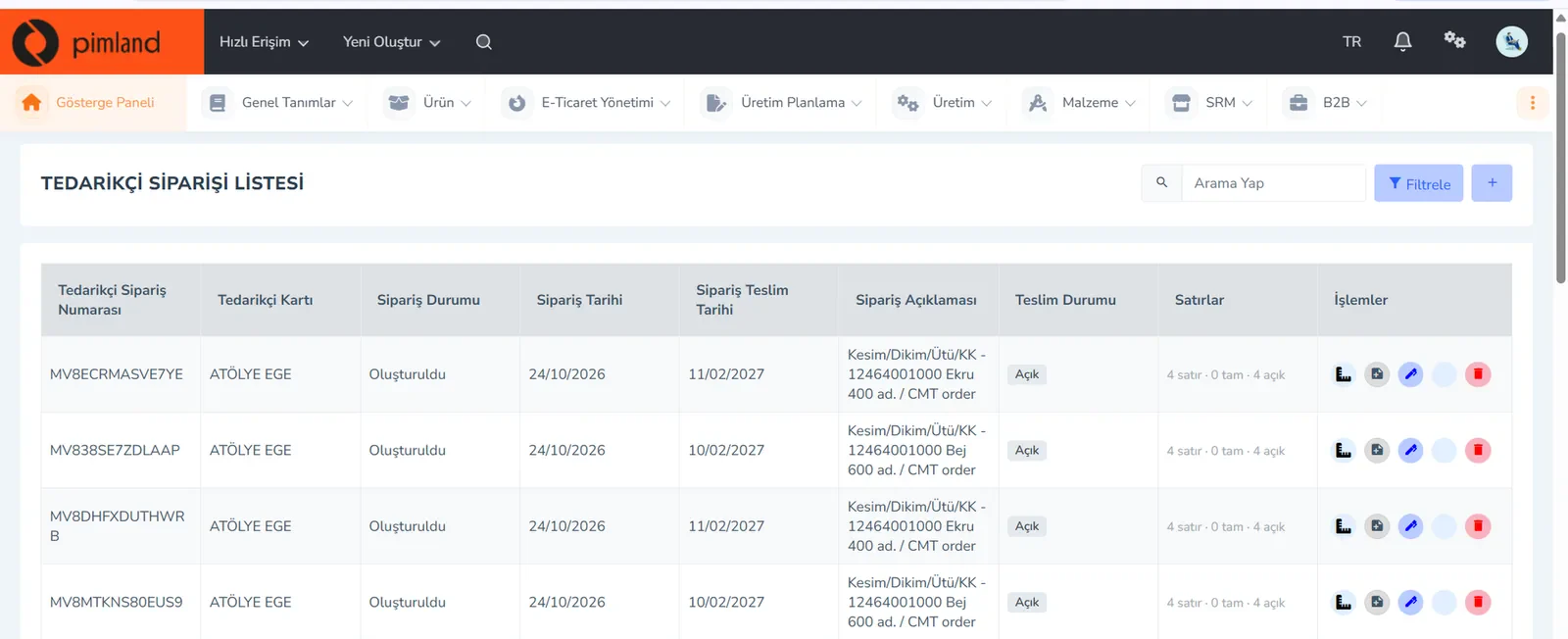
SRMMaterial and subcontractor orders are placed, and the PPS sample is approved. Every stage from cutting to shipment is tracked against its planned date. Inline and final inspections check the lot before it ships.
4 positions · inputs, outputs, typical problem
- Sourcing / purchasing specialist
- Production follow-up coordinator
- Quality control coordinator
- Middle manager
Inputs- Line review decisions
- Approved sample and tech pack
- Supplier card
Outputs- Purchase order
- Production plan and current status
- Quality control report
- Shipment
Handover pointThe moment a lot that passed final inspection goes out to the warehouse and the sales channels.
Typical problemA slip in the delivery date is seen in production follow-up but reaches the sales teams late; the launch slips without a plan.
CheckIs each order's actual status against its delivery date, and its quality result, in a shared record?
- 09
To the shelf and the screen
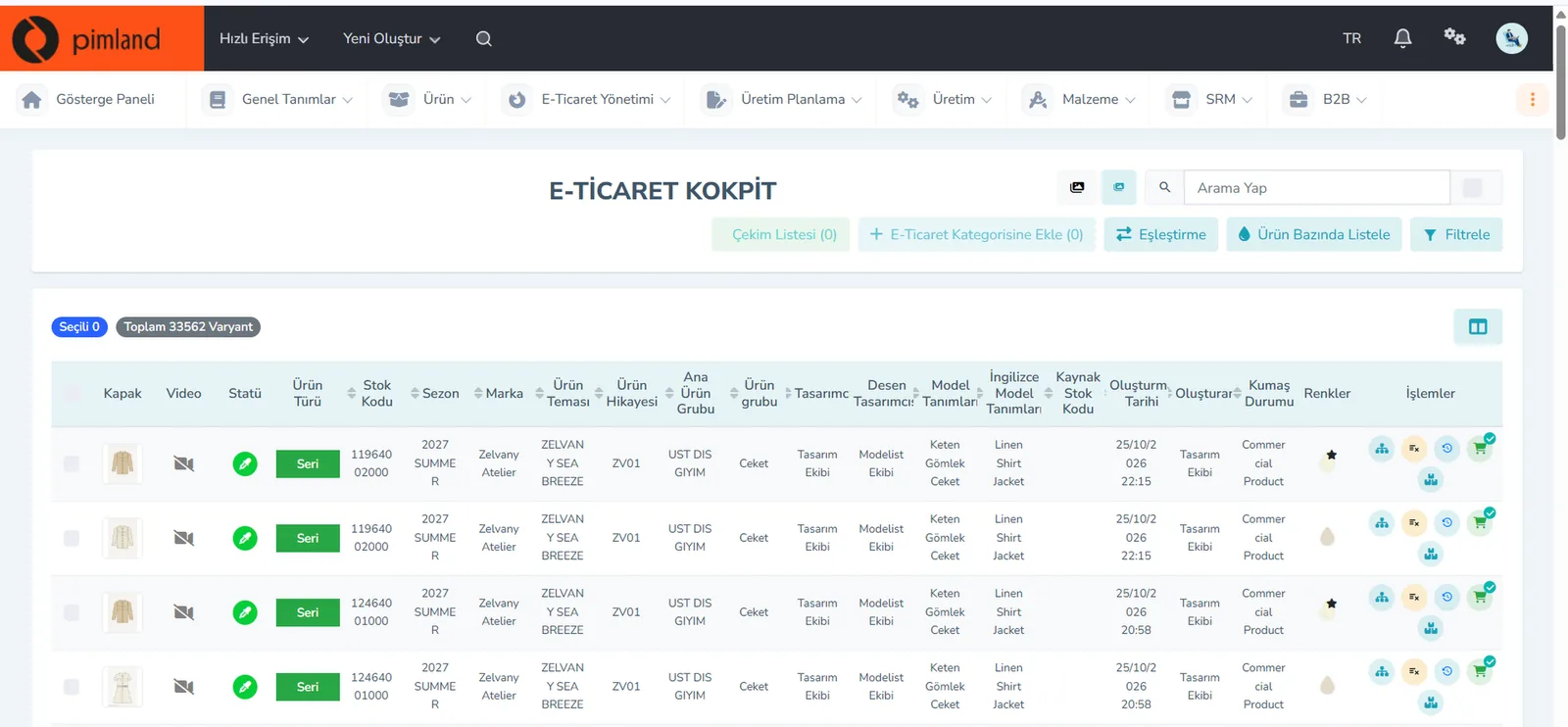
PIMThe product is photographed; the product card is prepared with its attributes, multilingual content and online size chart, and goes live on the channels. The shipment arrives at the store, the visual layout is set up and price tags go on.
8 positions · inputs, outputs, typical problem
- Stylist
- E-commerce specialist
- Store sales associate
- Merchandiser
- Planning specialist
 Digital marketing and content specialist
 Visual merchandiser (VM)
 E-commerce operations specialist
Inputs- Shoot list and images
- Product information (composition, care, measurements)
- Price and promotion list
Outputs- Live product cards
- The product on the store floor
Handover pointThe moment the product goes live on the channel and out on the store floor; customer questions now come to the sales teams.
Typical problemProduct information is entered separately for each channel; the site, the marketplace and the label say different things.
CheckIs the information on the channel the same as the product record; does every variant going on sale have its image, measurements and stock ready?
- 10
Sales, customers and the passport
DPPCustomers ask, buy and return. Composition, origin, care and end-of-life information is gathered in the digital product passport, opened by the QR code on the product; every claim has proof. At the end of the season, sales and return data, customer questions and complaints come back as lessons for the next season's brief.
10 positions · inputs, outputs, typical problem
- Store sales associate
- Customer service representative
- E-commerce specialist
- Sustainability specialist
- Merchandiser
- Quality control coordinator
- Product development specialist
- Middle manager
- E-commerce operations specialist
- Visual merchandiser (VM)
Inputs- Sales and return data
- Customer questions and complaints
- Certificates and test reports
Outputs- Digital product passport
- Product card corrections
- End-of-season review
Handover pointThe moment the end-of-season review goes into the next season's brief; the cycle closes here.
Typical problemA recurring complaint or return reason stays in customer service or in the store; the same pattern error repeats the next season.
CheckAre return reasons and complaints linked to the product code; is the document for every claim in the passport on record?
Delays are born when work changes hands
Most delays are born at the moment a piece of work changes hands.
- Fashion designer
- Product development specialist
Technical drawing, coded color, target fabric and design notes; product development turns these into measurements and workshop instructions.
If the link breaks: The tech pack is written by guesswork; the first sample isn't the product the designer wanted, and a round is wasted.
- Product development specialist
- Sample coordinator
The approved version of the tech pack and measurement chart, plus the sample request form.
If the link breaks: The sample is sewn from an old version; at the fit session, people discuss a product that isn't what the tech pack says.
- Sample coordinator
- Pattern maker
The fit session's comments, photos and measurement results.
If the link breaks: The pattern revision is incomplete or wrong; the same correction is requested again in the next round.
- Costing specialist
- Collection manager
The cost sheet calculated from the current BOM, and its difference from the target cost.
If the link breaks: The style is approved at the line review with the wrong cost; the margin loss is noticed only after the order is placed.
- Sourcing / purchasing specialist
- Production follow-up coordinator
The material and subcontractor orders placed, their delivery dates, and the approved PPS sample information.
If the link breaks: Production follow-up doesn't know when the materials will arrive; the cutting plan is built for nothing, and the delay is seen at the last minute.
- Product development specialist
- E-commerce specialist
Composition, care instructions and the online size chart; from the product record, a single source.
If the link breaks: The product card is copied from an old or similar product; the label, the site and the passport don't match, and size-related returns come in.
- Sustainability specialist
- E-commerce specialist
Environmental claims matched to documents, and passport data tied to proof.
If the link breaks: An unproven claim goes out on the product page and in a campaign; in the EU, environmental claims without documentation are banned, and the brand loses trust.
- Customer service representative
- Quality control coordinator
Recurring defect complaints about the same product, with the order, product code and photos.
If the link breaks: A lot problem gets closed one return at a time; sales from the same lot continue, and the supplier gets no feedback.
Four faces of the same product record
PLM (product lifecycle management) is the system that keeps all of a product's development information in a single product record, from its calendar to its design, from its tech pack to its BOM, from its samples to its costing.
PIM (product information management) is the system that gathers the information, images and multilingual content a product needs for sale in one place and sends them to e-commerce channels.
SRM (supplier relationship management) is the system that runs supplier cards, orders, production follow-up and quality inspections in a shared record between the brand and the supplier.
DPP (digital product passport) links a product's identity, materials, care and end-of-life information to a digital record opened by the QR code on the product.

The screens are from Pimland's demo environment; brands, suppliers, addresses and amounts are demo data.
You've reached the end. When you complete it, Training 1 is finished and the position cards open.
How fashion, retail and manufacturing companies work, and 20 position cards
First the required reading, then the cards for 20 positions: you learn how a fashion company works.
- FirstTraining 1: How is a product born? · read to the end and complete it
- Each cardA summary of the position, audio narration and Pimland screens
- Card3 short questions at the end of each part; 2 correct answers open the next part · no time limit
- AccountWith a free account, your progress follows you on every device
- At the endOnce you complete all 20 cards, the Pimland Basic Certificate arrives in your account automatically
 Certificate 1 · Pimland Basic Certificate
Reading is open to everyone; the part questions and the certificate require an Academy account.
PLM, PIM and SRM trainings
The shared language of the fashion world: PLM, PIM and SRM, with Pimland's real screens.
- OrderFirst PLM, then PIM, then SRM · one at a time
- Each training8 parts, in order · audio narration and Pimland screen
- Questions3 questions at the end of each part, 24 in total · 2 correct answers open the next part · no time limit, the questions change with every attempt
- UnlockPart questions open after your Basic certificate
- Verification14+ (date of birth in your profile); an e-Devlet education document for Turkish nationals
- At the endOnce the three trainings, ID and document are complete, Certificate 2 arrives in your account
Certificate 2 · Pimland PLM · PIM · SRM Certificate
Reading is open to everyone; the part questions and the certificate require an Academy account.
PRO · advanced training
Separate application, for selected candidates.
- WhoCandidates selected from applicants who hold both certificates
- OnlinePimland PLM software training and test
- On site1 day inside a fashion company, seeing PLM in use
- ApplicationWith “Apply for PRO training” on the PRO page; places are limited, and selected candidates hear back by email
Certificate 3 · Pimland PRO Certificate
Reading is open to everyone; the part questions and the certificate require an Academy account.
FAQYour questions
5 questions
Of the 242 fashion and retail job ads published in Turkey in August–October 2026, only 2 mention PLM by name. But the work the ads ask for, namely the season calendar (29%), sample flow (19%), costing (19%) and the tech pack (10%), runs on systems like these. Someone who knows the screen doesn't spend their first week asking questions.
PLM develops the product, SRM produces it with the supplier, PIM tells its story for sale, and DPP opens the product's identity to the customer. All four are different faces of the same product record.
The order is largely the same; durations, names and who does what vary by brand. A brand that launches new products every month and a brand that launches one big collection per season do not use the same calendar.
Yes, this is the Academy's first step. The page has three parts; when you answer at least 2 of the 3 short questions at the end of each part correctly and click the “I've read it, complete” button at the bottom, you start opening the position cards. There is no time requirement; read at your own pace. The questions open with your Academy account, and your progress stays in your account. This reading shows the company's whole flow; you will understand the 20 position cards much more easily.
No. The screens come from Pimland's demo environment; brands, suppliers, addresses and amounts are demo data.
· Pimland Academy team